The Famous-Sight Checklist Can Hide the Neighbourhood
A famous-sight checklist can crowd out the streets around a landmark. Use one nearby street to decide when to linger, move on or change your route.
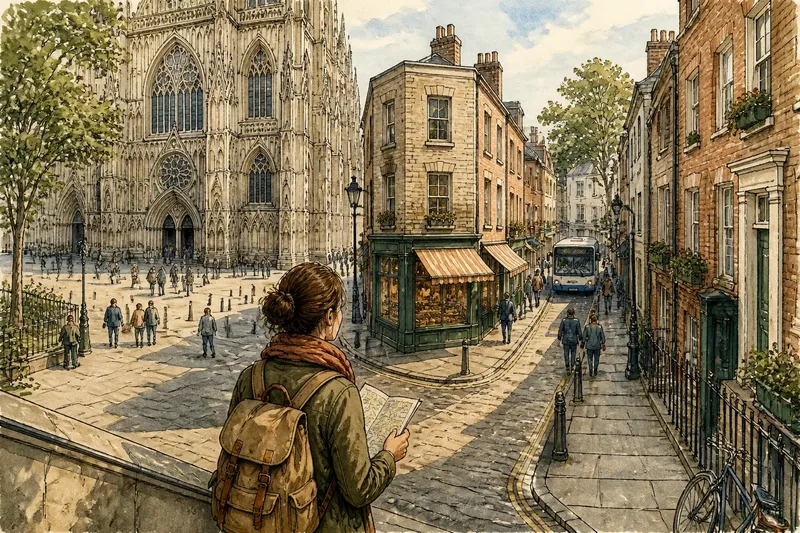
A famous-sight checklist can turn a visit to a landmark into a dash from its entrance to the next pin on your map. Before leaving, choose one nearby street as a cue to look beyond the celebrated view: it may show how the attraction fits into the ordinary life around it, or tell you that the next place deserves your time more.
This is not an argument for skipping every major sight or wandering without a plan. It is a way to decide what fits the day you actually have. Your energy, interest and practical needs matter more than a list assembled before you arrived.
What do you want from the landmark itself?
Start by naming the reason you came. Perhaps you want to see a particular façade, understand a public square, visit a museum, or stand somewhere you have long imagined. A clear reason makes it easier to tell when the visit has done what you hoped.
Some attractions need time inside: an art collection, a historic house or a large garden may have more to offer than the view from the pavement. Others can be appreciated from outside, especially if your interest is in their position in the city rather than a full tour. Check opening arrangements and access before building your decision around entry.
Now notice the nearest street that leads away from the landmark without simply returning you to the main approach. It need not be hidden or picturesque. A route with homes, workshops, a bakery, a bus stop or a quiet stretch of pavement can make the landmark’s setting easier to read.
Choose that street as an invitation, not a required detour.
Which situation sounds most like your day?
The right choice changes with your circumstances. These situations can help you choose between lingering at the sight, taking a short neighbourhood look, or moving on.
If the landmark is your main reason for coming, should you stay?
Yes, if the place itself holds your attention and you have time to experience it properly. Give the visit its due, then use the nearby street as a gentle transition rather than treating it as a competing attraction.
If you have limited time, should you still take the side street?
Only if it is close and your priority is to understand the surroundings rather than add another major attraction. A short look can show the relationship between the landmark and the district; if it would make you rush an experience you care about, leave it for another visit.
If crowds or noise are wearing you down, where should you go?
Try a calmer street if the route is straightforward and you feel comfortable there. It may offer a quieter place to pause, but a nearby street is not automatically peaceful, accessible or suitable for every traveller.
If the area feels unfamiliar, is it better to move on?
Yes, if you are tired, uneasy or unsure about the route. You can return to a familiar transport stop or a busier, clearly signed street; the value of noticing a neighbourhood does not outweigh your comfort.
What can one street tell you?
A street is useful because it gives the landmark context. Look for how people approach it: do they arrive through a broad public square, pass along a shopping road, or come from a residential lane? The pattern can reveal whether the attraction stands apart from daily movement or is woven into it.
Notice what shares the pavement. A school gate, corner shop, café, tram stop or row of front doors may tell you more about the district’s everyday character than another photograph of the landmark. These details are not clues to decode into a grand claim about local life. They are observable features that help you see what surrounds the celebrated site.
Pay attention to changes in sound, pace and use. A street may feel quieter than the plaza, or it may be busy with deliveries and people heading home. Either is useful information: it can help you decide whether to continue, pause somewhere suitable or return to your planned route.
One street is a starting point, not a representative sample of an entire neighbourhood.
How can you choose the next move without adding another checklist?
After your look, make one simple decision: continue along the street, return to the landmark area, or head towards your next destination. Use what you have noticed rather than searching for a fixed number of sights.
- Continue if the street is comfortable to walk, your curiosity is still active and you have enough time for the next part of the day.
- Pause if you need a rest, food or a moment to orient yourself. Choose a place where stopping feels appropriate rather than blocking a doorway or busy pavement.
- Return if the street does not suit you, feels difficult to follow or leads away from the transport and facilities you need.
- Move on if you have seen what you came for, your energy is low or another booked plan makes a detour impractical.
Say you have visited a well-known cathedral and still have time before meeting a friend nearby. You step onto a side street, notice a bakery, a row of homes and a bus stop, and decide the area feels lively rather than restful. The expected result of this invented situation is a clear choice: find a quieter place to sit or return to the square, rather than extending the walk just to claim you explored further.
That decision is part of the visit. A neighbourhood does not become more meaningful simply because you walked farther through it.
When is a street detour not the right choice?
Skip it if the route adds pressure without answering a question you care about. You might need step-free access, a direct route to a station, a place to sit, or enough time for a booked visit. Those needs are not obstacles to place-reading; they are part of how you experience a place.
Also move on if the street is closed, difficult to cross or plainly unsuitable for your needs. A map can help you see the route, but it cannot tell you how comfortable it will feel in the moment. Keep your bearings with familiar landmarks, and use a direct route back if you would rather not continue.
For some travellers, the most useful nearby street is the one that leads to a public transport stop, a bench or an open café. That practical connection can be more revealing—and more welcome—than a longer walk through unfamiliar blocks.
How does this change a famous-sight checklist?
Keep the sights that matter to you, but treat the list as a set of intentions rather than a scorecard. Before moving on from each landmark, ask whether you have had the experience you came for and whether one nearby street could help you understand its setting.
If the answer is yes, take a look and choose your next move from what you observe. If the answer is no, stay with the attraction or continue towards your next plan. A famous-sight checklist works better when it leaves room for the neighbourhood without demanding that you inspect every street.
The useful question is not how many places you can mark complete. It is whether your choices let you notice the landmark and its surroundings on terms that suit your day.