A Market Morning with Time to Wander
Plan a market morning with time to wander: choose one small purpose, browse without hurry and leave room for a pause that makes the visit feel local.
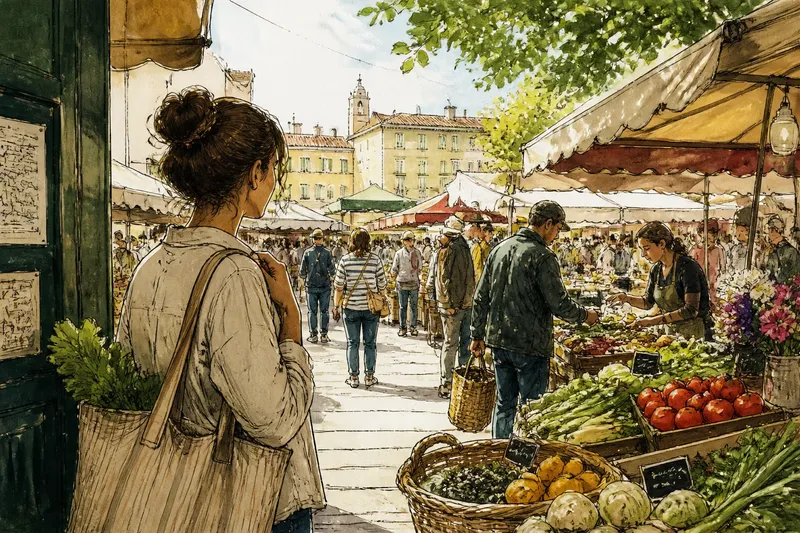
At a market, the best plan may be to arrive with one small purpose and no list of stalls to conquer. A market morning with time to wander lets you buy or notice something specific, then follow the sounds, smells and small discoveries that make a place feel like itself. The aim is not to see everything; it is to leave room for the market to set the pace.
What should your one small purpose be?
Choose a purpose that gives the visit a starting point without turning it into a task. You might want ingredients for a simple picnic, a particular fruit to taste, a locally made item to bring home, or an understanding of what people buy for an ordinary meal. These are different kinds of purpose: one involves carrying something, another is about tasting, and another asks you to observe.
Keep the purpose narrow enough to finish naturally. “Find something for lunch” leaves options open; “visit every food stall” turns browsing into a route with an endpoint. If you are buying a gift, decide what broad quality matters—useful, edible, easy to pack—rather than choosing the exact object before you arrive.
Consider what you can comfortably carry, whether you have room for food that needs care, and whether you want to eat at the market or later. A small cloth bag can help with purchases, while a separate pocket for money or a card keeps payment simple. Avoid bringing more kit than the morning needs.
Say you want to put together a picnic but have not chosen the exact food. You might look for one savoury item, something fresh and a place to sit nearby; as you browse, the available choices can shape the meal. The purpose remains clear, but the stalls still have room to surprise you.
How can you prepare without fixing the route?
Before setting out, check the market’s location, opening information and any access details that could affect your visit. Some markets are held in a covered hall, others occupy a street or square, and the arrangement can change how you enter, browse or find somewhere to pause. If an official visitor page or local notice gives guidance on opening times, payments or restricted areas, use it to avoid relying on assumptions.
Then make a light plan around comfort, not a stall-by-stall itinerary. Wear shoes suited to standing and moving across different surfaces, take a layer if the market is outdoors, and bring a bag that leaves your hands free. If you hope to buy chilled food or fragile goods, think about whether you can carry them safely and use them soon.
Choose an arrival window that suits the kind of morning you want. Going earlier may make it easier to look closely before you feel tired, while a later visit can suit a slower start. Neither is universally better: the market’s character, its opening pattern and your own appetite for crowds all matter.
Leave the rest of the morning unbooked if you can. A fixed appointment immediately afterwards can make every queue or conversation feel like a delay, even when it is part of the experience.
What should you notice as you arrive?
Pause at the entrance or edge of the market before choosing a direction. Notice where people are coming and going, whether there is a central aisle or several smaller lanes, and where the quieter edges might be. This brief look helps you orient yourself without demanding a full map of the place.
Pay attention to how the market is being used. Are people stopping for a quick purchase, talking with stallholders, eating as they walk, or carrying baskets through the space? These visible details can suggest whether it is mainly a place for errands, a social meeting point, a visitor attraction, or a mix. Treat them as clues rather than rules: one busy stall does not tell you what everyone is doing.
Look at what is displayed and how it is arranged. Seasonal produce, prepared food, household goods, flowers or craft objects may sit side by side, and the mix can tell you more than a row of souvenirs would. Read signs where available, and watch how people handle or choose items before assuming how a stall works.
Keep walkways clear, especially where people are carrying bags or moving goods. If you want to stop to look, step aside rather than pausing in the busiest part of an aisle.
How do you browse without turning it into a checklist?
Start with the purpose you chose, but give yourself permission to pass a promising stall and return later. A first lap can help you understand the layout and see what is on offer; on a second pass, you can decide whether something genuinely suits your purpose. This is a useful alternative to buying the first appealing object simply because you fear missing it.
Browse at a pace that lets you look without blocking others. If you want to examine an item, move closer when there is space and ask before handling anything that seems delicate or is not clearly available for touching. A friendly question about what something is, how it is usually eaten or where it was made can be a natural way to learn, provided the stallholder is not busy serving someone else.
Be attentive to the difference between looking and recording. A photo may help you remember a sign or display, but ask before photographing a person, a stallholder at work or a close-up of goods where permission is not obvious. You can also note a name or describe a colour and texture later, without interrupting a transaction.
If the crowd thickens, let it change your route rather than insisting on getting through. Browse an open edge, step outside for a moment, or return to a lane when it has cleared. The small purpose is a guide, not a reason to push past people or compete for attention.
How do you choose what to buy or taste?
Take a moment to check what an item is, how it is sold and whether it suits your plans. For food, ask about ingredients or serving suggestions if that information matters to you. If you have an allergy or a dietary requirement, rely on clear information from the seller and make a cautious choice; where a stall cannot answer, it is sensible to skip the item.
For a non-food purchase, think about whether it can travel with you, whether it is easy to care for and whether you will still want it after leaving the stall. A small object with a clear connection to your visit may feel more meaningful than something bought only because it is labelled local. The label itself is not proof of origin, so ask politely if that detail matters to your decision.
Prices, payment methods and any rules for sampling or photography can vary between stalls and places. Check the sign or ask the seller rather than assuming one market’s custom applies everywhere.
Imagine you find a jar of chutney that suits your picnic idea, but you also have a long walk ahead. You could ask whether it is sealed for carrying and compare it with a ready-to-eat alternative; the expected result is a choice that fits the day rather than an awkward purchase to manage. If nothing suits, completing the visit without buying is also a reasonable outcome.
Where can you pause after browsing?
Build in a pause before you arrive, not only after you feel worn out. Look for a public bench, a nearby square, a café with room to sit, or a quieter edge of the market where stopping will not obstruct the flow. If the market has seating, notice whether it is shared and make space for others rather than treating a table as a base for the whole morning.
Use the pause to eat or drink what you have bought, sort your bag and decide whether you want another pass. You may notice that a taste changes your view of a product, or that a stall you missed is now easier to approach. Equally, you may be ready to leave. Both choices keep the morning responsive to your energy.
For a picnic, check that your food is suitable to carry and eat in the place you choose, and take your rubbish with you. If you have bought something that needs refrigeration or careful handling, follow the seller’s directions and do not leave it sitting in a warm bag while you continue browsing.
What questions help you plan a market morning?
Should you visit a market early?
Choose an arrival time based on the market’s opening pattern and the atmosphere you want, rather than assuming the earliest moment is best. If you prefer more space to look, an earlier visit may suit; if you want to start slowly, check that stalls are still open when you plan to arrive.
How much time should you leave for a market?
Give yourself enough unbooked time to make one relaxed circuit, stop when something interests you and take a pause afterwards. The useful measure is not how many stalls you cover but whether you can browse without watching the clock.
What should you take to a market?
A light bag, a payment method you can use there and clothing suited to the venue are often enough. Add only what your purpose requires, such as a container for a planned picnic, and check the market’s own guidance if you are unsure about bags or access.
Is it all right to visit without buying anything?
Yes. You can look, listen and learn about the market without making a purchase, while respecting stallholders’ space and busy moments. If you do want to sample or handle an item, ask first when the custom is unclear.
How should you finish the morning?
Before you leave, check that purchases are secure and that you have not left anything behind where you paused. Then choose whether to walk on, return for one last look or take a seat nearby. You do not need to turn the visit into a report; a short note about a taste, a stall sign or an unexpected detail can be enough to help you remember it.
A market morning with time to wander works best when its small purpose gives shape to the visit but does not control every minute. Plan around what you hope to carry, leave room to notice how the market is used, and protect a little time for a pause afterward. That final quiet moment can help you decide what the place offered beyond the thing you came to find.